



8 Warning signs your motorcycle engine oil needs changing
16 Apr 2026
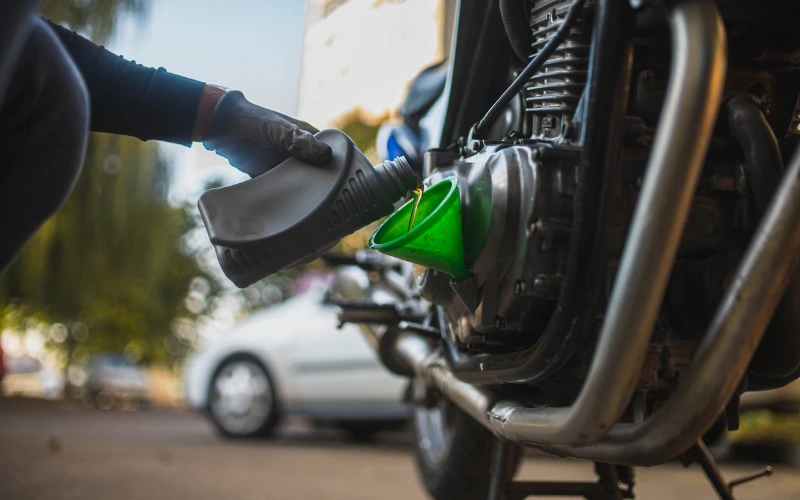
Engine oil is the lifeblood of your motorcycle, lubricating, cooling, and cleaning internal parts. Many people only change their bike’s engine oil depending on the calendar date or at a certain mileage. But the condition of your motor oil and your riding habits matter too; for example, harsh riding conditions can accelerate oil degradation. However, infrequent riding doesn’t mean you can skip oil changes.
In this guide, we’ll cover how to tell if your motorbike’s engine oil needs changing, without relying on miles ridden, so you never miss an oil change again.
Why oil condition matters on a motorbike
Engine oil lubricates moving parts, reduces friction, absorbs heat and carries away contaminants to prevent corrosion. If you neglect to change your motorcycle engine oil, you risk increased wear and tear, overheating, poorer engine performance and potentially serious engine damage.
Motorbike engines often work harder than car engines, especially if you frequently ride in stop/start traffic, city conditions or take short journeys. All of these factors can accelerate the degradation of the engine oil’s condition, making it necessary for more frequent engine oil changes.
How often should you change motorbike engine oil?
As a general rule, many manufacturers or service guides recommend changing your motorbike oil every 3,000 to 5,000 kilometres (1,864-3,107 miles) or every 6-12 months, whichever comes first. However, these recommendations are based on a lot of factors, including:
- Type of oil used: Mineral, semi-synthetic and full synthetic oil all degrade at different rates. Full synthetic oil is enhanced with additives, so it can provide longer drain intervals.
- How often and how hard the bike is ridden: Frequent city riding, sitting in traffic, stop/start riding and heavy loads can all put additional strain on your engine and make more frequent oil changes necessary.
- Riding terrain: High temperatures, excessive dust on the road and uneven riding terrain can all put more stress on your engine and contaminate your engine oil.
Every bike and every rider is different, so motorcycle oil change intervals are not a one-size-fits-all situation. To determine the right oil change intervals for your motorcycle and riding style, you should always consult your owner’s manual for the recommended oil grade and oil change intervals.
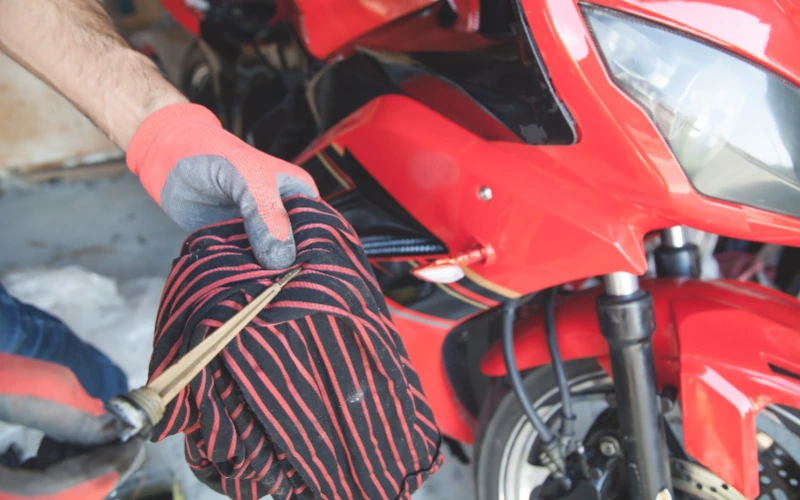
Warning signs that it’s time to change your engine oil
Before you even reach the recommended mileage or time intervals to change your oil, there are a number of warning signs you should look out for which could suggest it’s already time for an oil change.
>
Dark, thick or dirty oil
Fresh oil typically has an amber or golden colour and a translucent appearance. So, if the oil looks dark, black or murky on the dipstick, it’s a sign that it is dirty or degraded.
Change in oil consistency or texture
If your engine oil feels gritty, coarse, or “dirty” when rubbed between fingers, it may have collected contaminants and lost its lubricating quality.
Burnt or acrid smell or an unusual odour
If your oil has become overheated or oxidised, it can develop a burnt smell, indicating it’s breaking down and becoming less effective.
Engine is running hotter than usual or overheating
Inefficient or degraded oil cannot absorb heat properly, which leads to a higher engine temperature.
Unusual engine noise (rattling, knocking, grinding)
If components inside the engine aren’t lubricated properly, moving metal parts may grind, causing noise, which can signal that the protective properties of the oil have failed.
Decreased performance or sluggish throttle response
If the engine feels slow or unresponsive when you accelerate, degraded oil could be contributing to inefficiency.
Visible metal particles or contaminants in oil
If you notice any metal particles or debris on the dipstick, it points to excessive wear or oil contamination.
You can’t remember when you last changed it
If you’re in doubt, the oil looks suspicious, or your bike’s behaviour is different from usual, check your engine oil or get it changed.
Best Practices: When & how to check your motorcycle oil
Your motorcycle oil changes and degrades over time, so it’s important to check it frequently so you can become familiar with its condition and any changes become easier to spot.
- Check oil level and condition regularly: Ideally, you should check your motorcycle every few weeks or before a long ride. Use the dipstick or follow the instructions in your bike’s manual.
- Always check the manufacturer’s instructions: Some bikes need to have oil levels checked when the engine is cold, whereas other manufacturers recommend checking them after a short ride, so consult your owner's manual.
- When changing oil: If you’re changing your engine oil, you should also replace the oil filter. Many motorbike service guides recommend changing the filter with every oil change, because bikes run harder and accumulate contaminants faster.
- Use the correct oil type and viscosity: Motorbike oils are specifically formulated to protect motorbike engines, clutches and other components, so a car oil simply won’t do. Consult your owner’s manual for recommended formulation and viscosity.
- Riding in demanding conditions: If you do a lot of city driving, you ride in hot weather, take short trips or travel along dusty roads, consider checking or changing your oil more often than the standard intervals.
It’s important to remember that this is only general guidance and you should always refer to your owner’s manual for specific advice for your vehicle.

What happens if you ignore motorcycle oil maintenance
There are a number of risks and long-term consequences that are associated with failing to keep up with motorcycle oil maintenance and oil change intervals. These can all lead to poor engine performance or even engine failure.
- Increased friction and accelerated wear of engine components can cause the engine to overheat or seize.
- Reduced engine performance may lead to lower fuel efficiency, possible contamination or sludge build-up inside the engine passages.
- Reduced engine lifespan, costly repairs or even a full engine replacement may be necessary if the damage accumulates.
- For riders who may want to sell their bike in the future, a poor maintenance history and missed oil changes can hurt the resale value.
When in doubt, change the oil
While recommended oil change intervals serve as useful guidance, observing the actual oil condition and your bike’s performance can be even more telling. By checking your engine oil every few weeks, you can become familiar with its appearance, smell and consistency as well as typical engine noises and operating temperature. That way, you can recognise any signs of degradation more easily, rather than relying on time or mileage.
By using the right motorcycle engine oil, changing it when needed, and replacing the oil filter, these maintenance habits are just a small effort that can avoid big bills.
Discover our motorcycle maintenance checklist now and keep your bike in top condition.