



Immersion Cooling: Transforming Data Centre Efficiency and Sustainability
13 May 2026
Key summary
- Immersion cooling uses dielectric fluids to dissipate heat far more efficiently than air, significantly reducing energy use and costs.
- It enables more sustainable data centres by lowering carbon emissions and supporting higher performance for growing AI demands.
- While it requires upfront investment and new infrastructure, it offers long-term efficiency, scalability and reliability benefits.
Data centres driven by AI and digital demand have grown rapidly over the past few years. One of the main challenges is managing the extreme heat generated by the servers, which are currently cooled with air cooling via HVAC systems. However, immersion cooling is a game-changing alternative that can reduce energy consumption and improve cooling reliability.
We’ll be exploring immersion cooling and how it can improve data centre efficiency.
The problem: Heat and energy in data centres
Data centres generate a significant amount of heat from servers, which need to be cooled. However, cooling is often one of the most expensive energy costs because traditional air cooling systems can be inefficient. With business pressures to be more sustainable and reduce energy consumption, there is certainly a demand for a more efficient way of cooling.
What is immersion cooling?
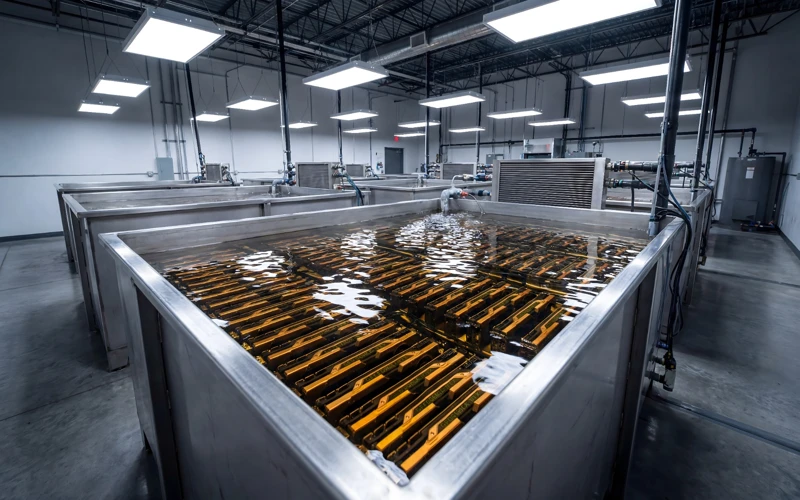
Immersion cooling involves submerging servers in a bath of cooling liquid to transfer heat away from the components. It uses dielectric fluids that are non-conductive, safe for use with electronics, and efficient at transferring heat. Immersion cooling is rooted in existing technology and has been used in computing technology since the 1960s, so this proven science can be applied in a new context.
Why immersion cooling is more efficient
Immersion cooling conducts heat far more efficiently than air, so it can reduce the amount of energy used for cooling by upto 95%. Some of the key benefits of immersion cooling include:
- Up to 10x better heat dissipation
- Significant reduction in cooling energy requirements
- Lower operational costs
- Improved system performance
Overall, immersion cooling enables data centres to operate at higher performance levels while significantly reducing energy consumption and costs.
Sustainability benefits
Immersion cooling is a key enabler of sustainable digital infrastructure that offers multiple benefits to data centres:
- Reduced energy consumption
- Lower carbon footprint
- Supports greener data centre operations
Together, these benefits make immersion cooling a powerful solution for data centres looking to meet growing digital demand while reducing their environmental impact.
Trade-offs vs traditional cooling
While immersion cooling offers clear efficiency and sustainability benefits, it also comes with certain challenges and trade-offs compared to traditional cooling methods.
Ultimately, while the transition requires investment and adaptation, the long-term efficiency, performance and sustainability gains make immersion cooling an increasingly attractive solution.
The future of data centre cooling
As AI adoption continues to grow, the need for efficient cooling grows too. Immersion cooling is a scalable solution, so data centres can increase adoption as technology matures. Lubricant and fluid expertise are essential for enabling this shift. They provide the advanced thermal management properties needed to safely and efficiently dissipate heat from high-performance systems, ensuring reliability, efficiency and long-term performance as demand continues to rise.
Cooling the future sustainably
Cooling plays a central role in data centre performance. While traditional cooling systems do the job, immersion cooling offers a more efficient, sustainable and scalable way of cooling, which is ideal for large-scale data centres. As demand for AI and data centres grows, advanced cooling fluids will play a critical role in the digital future.
Discover more in our interview with Rafe Briton, The Lubrication Expert, and David Hall, Chief Technology Officer at Gulf.